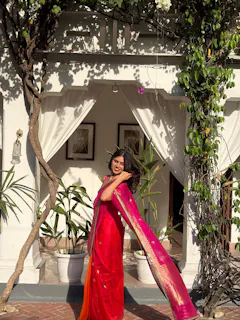
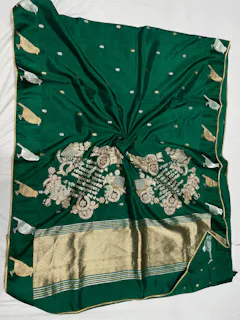
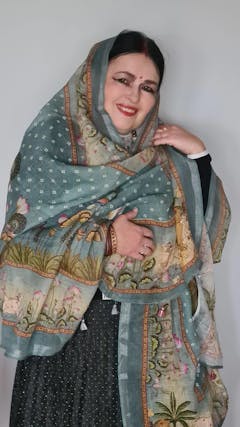
A lovely inclusion to your existing accessory collection, this fabric looks royal and comfortable to wear. Made of quality satin tissue silk, this magenta-colored has a soft texture that cannot be missed. A good drape to your outfit, it has a natural shine and distinct handwoven gold zari jaal all over which makes it better than the rest.
Colour: Magenta Pink
Pattern: Solid
Work: Handwoven
Fabric: Satin Tissue Silk
Occasion: Wedding/Party/Festive Wear
Features: It has handwoven prestine gold zari floral jaal all over the fabric can be ideal for making outfits.
No Return & Exchange Available On Fabrics
Actual color may slightly vary from the Image
SKU: CTH-039B-1
Let customers speak for us
from 293 reviews
jasmine
pink silk saree
Very light and comfortable saree. Looks graceful when worn. Happy with the purchase.
Reddish Pink Shaded Banarasi Organza Silk Saree
06/12/2026
Manya
pink lehenga
Really pretty in person. Fabric feels rich. Good for functions and weddings.
Pink Raw Silk Kalidar Lehenga Inspired by Bollywood
06/12/2026
jasleen
black lehenga
Bought for bridesmaids. Looks elegant and wearable again later. Everyone liked it.
Black Banarasi Raw Silk Kalidar Bridesmaid Lehenga
06/12/2026
Dimple
green banarsi silk dupatta
Nice dupatta. Bird motifs are beautiful. Easy to pair with outfits.
Green Banarasi Silk Dupatta with Bird Motifs
06/12/2026
disha
pink banrasi silk dupatta
Used it with a plain suit and it upgraded the whole look. Very rich color.
Magenta Pink Banarasi Silk Dupatta with Aghanya Pichwai Motifs
06/12/2026
Gargi
red salwar suit
Silk quality is really good. Dupatta design is unique. Feels premium.
Deep Red Katan Silk Salwar Suit with Bird Motif Dupatta
06/12/2026
anju
red silk suit set
Dupatta is the best part. Looks festive and rich. Overall good outfit for occasions.
Red dupion Silk Suit Set with Gayatri Mantra Dupatta
06/12/2026
ashu
Sky blue saree
Color is very refreshing. Peacock work is subtle and nice. Comfortable for long wear.
Aqua Blue Georgette Saree with Peacock Floral Work
06/12/2026
tanu
black organza saree
Loved the half-and-half design. Looks very trendy. Got compliments when I wore it.
Black Half n Half Organza Silk Saree with Applique Work
06/12/2026
neha
pink organza saree
Gift from my sister. Really pretty in person. Very light and perfect for summer events.
Pink Organza Silk Saree with Gota Patti Floral Work
06/12/2026
simar
black crushed saree
Wasn’t sure at first but glad I ordered it. Looks stylish and modern. Drapes really well.
Black Crushed Tissue Silk Saree with Gold and Silver Stripes
06/12/2026
simran
red saree
Blouse is the highlight. Radha Krishna work is very detailed. Got a lot of compliments. Packaging was good too.
Nita Ambani Inspired Red Patola Saree with Radha-Krishna Embellished Blouse
06/12/2026
Kanchan
white and red organza silk saree
Looks exactly like the pictures. Light and elegant. Cutwork is neat. Good for festive wear.
White and Red Organza Silk Saree with Applique & Cutwork
06/12/2026
Kiran
banarasi silk saree
Loved the mix of motifs and bandhani print. Looks different from regular sarees. Fabric is nice and soft.
Banarasi Silk Black Saree with Pakshi Motif and Tie & Dye Bandhani Print
06/12/2026
Prachi
black soft silk
Very comfortable fabric. Not heavy at all. Easy to drape and wear for long hours. Good purchase.
Yes, this is one of the stronger fabric choices for both a sangeet lehenga and a reception saree, since the satin tissue silk drapes beautifully into flared lehenga skirts and pleats elegantly into modern saree silhouettes. The deep magenta tone photographs particularly well under sangeet stage lighting and reception decor, and the handwoven base distinguishes the outfit from machine-woven satin alternatives, which is why brides often pick it for one of their pre-wedding or post-wedding event outfits.
Satin tissue silk combines the smooth, lustrous surface of satin with the lightweight, metallic-threaded body of tissue silk, giving a fabric that is fluid, shimmery, and structured at once. Regular tissue silk is crisper and lighter, while pure satin is heavier and more drape-dependent. Satin tissue silk sits between the two, which makes it especially preferred for couture-style ethnic outfits where designers want both luminous surface and confident structural fall in a single base.
Typical tailoring requirements vary by silhouette: a saree uses around 5.5 to 6 metres including blouse fabric, a flared lehenga skirt uses around 4 to 6 metres depending on flare, an anarkali kurta uses around 3 to 3.5 metres, and a structured Indo-western jacket-and-skirt set uses around 4 metres. Buyers are encouraged to confirm exact requirements with their tailor before purchase, factoring in motif placement preferences and any pattern-matching the design demands.
Buying unstitched fabric is often the smarter choice for women who want a custom fit, a distinctive silhouette, or an outfit that responds to their proportions and personal style rather than off-the-rack sizing. With a handwoven satin tissue silk of this character, the same yardage can be tailored into multiple silhouettes over the years. Stylists frequently recommend the fabric-first approach for petite, tall, plus-size, and design-forward buyers.
Yes, tissue silk weaving is a celebrated heritage tradition of Banaras, dating back centuries and historically associated with royal and ceremonial dressing across northern India. The combination of fine silk yarns and metallic threads on a handloom requires significant artisan skill, which is why authentic handwoven Banaras tissue silk is increasingly recognised as a collectible Indian textile. Buyers investing in handwoven tissue support the continuity of master weavers in Banaras's traditional weaving clusters.
Satin tissue silk is closer to a year-round fabric than a strictly seasonal one, with its strongest window during the October-to-March Indian wedding and festive season. The lightweight metallic body keeps the fabric breathable in cooler months while providing the visual richness winter weddings call for. In peak summer, satin tissue is best reserved for AC indoor evening events, where its shimmer reads dramatically without the discomfort of heavier silks against the skin.
Yes, this deep magenta handwoven satin tissue silk fabric is one of the stronger picks for women designing a custom wedding-guest outfit, since the unstitched format allows complete control over silhouette, sleeve, and length detailing. Tailored into a saree, a sharara lehenga, or a structured anarkali, the deep magenta base photographs vividly across both daytime and evening lighting, which is why custom-fabric buyers often pick it for sangeet, mehendi, and reception guest looks.
Yes, this fabric is especially suitable for modern brides who want to commission a custom outfit rather than buy a ready-made bridal piece. The handwoven satin tissue base reads as both heritage and contemporary, and the deep magenta tone is striking enough for a cocktail or sangeet bridal entry without committing to traditional red. Brides often tailor it into a structured reception lehenga, a draped saree-gown, or a modern Indo-western set.
Handwoven satin tissue silk is a Banaras handloom fabric created by interlacing fine silk yarns with metallic zari threads on a traditional pit loom, using a satin weave structure that floats yarns over the surface to create the fabric's signature glossy finish. The handwoven distinction means the fabric is produced one yard at a time by master weavers rather than machine-produced, which gives it irregularities, depth of sheen, and heritage value distinct from powerloom alternatives.
This handwoven satin tissue silk yardage can be tailored into a custom saree, a structured reception lehenga, a sangeet sharara set, a draped saree-gown, a modern anarkali, a layered ruffled lehenga, or an Indo-western jacket-and-skirt pairing. The fluid yet structured body of satin tissue suits both flared and sculpted silhouettes, which is why designers and custom tailors recommend this fabric especially for cocktail and sangeet wear where modern silhouettes are preferred.
Yes, deep magenta pink is one of the most universally flattering occasion-wear colours across the full range of Indian skin tones, from fair to deep. The tone carries enough red warmth to glow against the skin and enough blue depth to read sophisticated rather than candy-pink. It photographs vividly under both daytime sun and evening event lighting, which is why stylists frequently recommend deep magenta as a smarter choice than safer pastels for women who appear in heavily photographed events.
Karuna Choudhary
Pink Banarasi Saree
This is such a gorgeous banarasi saree. When I first saw it, I loved the color palette. It is a perfect choice for a bride to be!! Or someone is who is newly married.
Gorgeous color, pure fabric..a statement piece.
Reddish Pink Shaded Banarasi Organza Silk Saree
Dr Suman
Great choice ♥️
I brought the Gayatri mantra saree in bottle green color. Had a good experience with the team who made the experience hassle free.
Nita Ambani Inspired Red Saree with Gayatri Mantra
Anamika
Something beautiful and special
I am very glad to have bought this extraordinary dupatta. The design is unique and the quality of material the best.
Steel Blue Linen Dupatta with Digital Printed Pichwai Motifs
Khushboo
The suit was even prettier in person..loved the fabric and the colour.🩷👍
Red Salwar Suit Set with Intricate Zari Work And Dupatta
Sunayana Sharma
Absolutely worth it
I felt like a queen in this gorgeous saree ❤️✨ You made my Karwa Chauth festival even more special. The quality of the fabric is really good and the Gayatri Mantra embroidery is done so beautifully. I truly recommend Chinaya Banaras and loved being a part of the Chinaya family 💫
Nita Ambani Inspired Red Saree with Gayatri Mantra