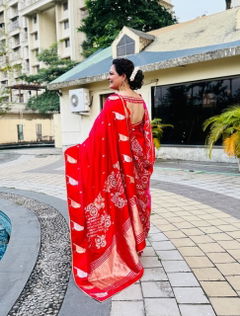
Yellow Banarasi Dupatta with Gold Zari Pichwai Jaal Work

10,745 INR
MRP incl. of all taxes.

An additional 10% automatic coupon code will be applied on the checkout page.

Justification

FLAT 10% OFF

Get it on all Dupatta Orders of yours

FREE SHIPPING

on domestic orders above 5k INR

FLAT 10% OFF

Get it on all Dupatta Orders of yours

FREE SHIPPING

on domestic orders above 5k INR

CONSULT OUR STYLIST

This Banarasi dupatta is made from soft, smooth pure Katan silk fabric. The vibrant yellow shade is enhanced with an intricate gold zari woven Pichwai brocade jaal throughout, complemented by detailed borders and a pallu.

Key Features:
• Material: Banarasi Katan Silk
• Color: Yellow
• Gold zari woven Pichwai brocade jaal all over
• Intricate borders and pallu
• Dupatta Length: ±2.5 meters

Deliver within 20-25 business days. For urgent delivery, Please contact us.

Perfect for: Weddings, Festivals, or Special occasions.

Care Instructions: Dry clean only.

Please Note: Actual color may slightly vary from the image.

Tips: Pair this yellow Banarasi Katan silk dupatta with a matching yellow kurta for a vibrant wedding look or choose a contrasting maroon kurta for a regal combination.

SKU: CDP-285
Secure Payment 100% Authentic Easy Returns Free Shipping Free Shipping

FREQUENTLY BOUGHT TOGETHER

Recently viewed

FAQs

Yes — a yellow Banarasi dupatta with gold zari is a multi-occasion investment. For Navratri, yellow is one of the nine auspicious colours and this dupatta serves the occasion perfectly. For Diwali, it adds festive brightness paired with any ethnic ensemble. The Pichwai brocade jaal also connects the dupatta to devotional aesthetics appropriate for religious festivals, pujas, and cultural events throughout the year. Unlike trend-specific fashion pieces, a Banarasi Katan silk dupatta retains its relevance season after season.
Yes — the vibrant yellow Banarasi Katan silk dupatta with gold zari Pichwai brocade jaal is one of the most recommended options for haldi ceremonies. Yellow is the traditional colour of haldi functions across North, West, and South Indian wedding traditions. The gold zari woven all over creates a festive richness that photographs brilliantly, while the Pichwai-inspired brocade jaal carries cultural significance rooted in devotional art from Rajasthan. It pairs equally well with a yellow kurta for a coordinated look or with white and ivory for a fresh contrast.
Banarasi Katan silk is a tightly woven pure silk with a smooth, slightly firm body — it holds its drape without slipping, carries gold zari work crisply, and has a natural lustre that synthetic fabrics cannot replicate. Net and chiffon dupattas are lighter and more floaty, but they lack the structural richness that makes this yellow Pichwai jaal dupatta suitable for weddings and formal occasions. Katan silk also tends to become heirlooms — their weight and weave make them durable across decades of use.
For a North Indian winter wedding, layer the yellow Pichwai dupatta over a deep jewel-toned velvet or heavy silk kurta — maroon, bottle green, or navy — to create warmth and contrast. The gold zari picks up the ambient warm lighting of winter shamianas and fairy-light-lit venues, making it one of the most photogenic choices for the season. Complete the look with antique gold kundan or meenakari jewellery, a potli bag in matching silk, and pointed khussa flats for a traditional aesthetic.
Yes — 2.5 metres is the standard dupatta length preferred across North and West India for salwar-kurta combinations, sharara sets, and lehenga drapes. It allows for a full single-shoulder drape, a double-sided drape across the arms, or a bridal-style head covering. For women who prefer the dupatta to double as an odhhni or shawl, the 36–39-inch width of this piece provides additional coverage, making it comfortable for both styling and cultural settings that require head coverage.
Both. In traditional styling, it works beautifully over silk kurtas, anarkalis, or lehengas with matching jewellery. For contemporary fusion, the bold yellow base and intricate Pichwai jaal make it a statement accessory over monochrome outfits — a white dhoti-style pant, a structured crop blouse, or even draped over a tuxedo jacket for destination wedding events. Banarasi dupattas have gained significant traction in modern Indian bridal fashion as hybrid styling pieces.
Absolutely. This yellow Banarasi Katan silk dupatta with Pichwai jaal work is a powerful styling piece on its own — draping it over a simple kurta, sharara, or even a white suit transforms the outfit into a festive ensemble instantly. It is an ideal choice for women attending multiple wedding functions who prefer versatile pieces that can be restyled across events. The silk weight and gold zari make it feel premium without the commitment of a full saree or lehenga.
Katan silk is made from tightly twisted silk threads that produce a smooth, firm fabric with a distinctive crisp drape and high sheen. In Banarasi weaving, Katan silk is considered one of the finest base fabrics because its density allows intricate gold zari jaal patterns to be woven in without distortion — the design remains sharp and legible across the full length of the dupatta. It is heavier than organza or georgette, which gives the dupatta substance and heirloom quality.
Pichwai is a form of devotional painting from Nathdwara, Rajasthan, traditionally depicting scenes from Lord Krishna's life — most notably cows, lotus flowers, and garden imagery. In this dupatta, Pichwai motifs are not painted but woven in gold zari across the full body and pallu using traditional Banarasi brocade techniques. The result is a textile that bridges two revered Indian craft traditions — Pichwai heritage iconography and Banarasi silk weaving — creating a culturally rich, artisan-crafted product that is unlike standard printed dupattas.
This dupatta is most recommended for haldi ceremonies, mehndi functions, Ganesh puja pre-wedding events, and daytime sangeet performances. Yellow is an auspicious and celebratory colour associated with blessings, fertility, and new beginnings across most Indian communities. The Pichwai brocade motifs — rooted in Nathdwara devotional art — add spiritual and cultural resonance, making this dupatta especially meaningful for families who value heritage-conscious wedding aesthetics.
Both approaches work — the choice depends on the occasion and styling intent. For a coordinated tonal look at haldi or mehndi functions, matching a simple yellow silk kurta with this dupatta creates a layered, sophisticated ensemble. For contrast, pairing it over a deep maroon, bottle green, or ivory outfit lets the dupatta become the focal point, adding instant occasion-readiness to a simpler base look. The versatility of a yellow gold zari dupatta is precisely what makes it a preferred investment piece.