

You may also like
Recently viewed
FAQs
It translates well. Wine with gold reads as evening formality in almost any setting, and organza's crisp drape holds a clean silhouette that suits a corporate awards night, a charity dinner or a milestone birthday as readily as a family function. Style it with restrained jewellery and a plain contrast blouse and the saree reads elegant rather than specifically festive.
Look for three things: whether the zari is woven or applied, whether the dyeing is hand-done or printed, and whether the silk is certified. This saree carries woven zari butis and border, a hand-dyed shibori pallu, and Silk Mark certification for the silk itself. Chinaya Banaras also offers a video call and WhatsApp stylist consultation, which is worth using before committing at this price.
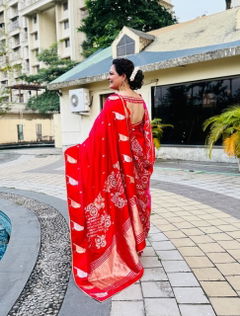
A printed pallu reproduces a pattern identically across every piece and flattens under light. An embroidered pallu adds weight and can catch or fray. Shibori sits between them: the pattern comes from binding and dyeing the cloth by hand, so it carries soft gradients and slight irregularity that neither printing nor embroidery reproduces, and it adds no weight to the drape at all.
A designer label typically buys you a name, a heavier embellishment budget and a considerably higher price. What you get here instead is craft: handloom organza, woven gold zari butis and border, and a hand-dyed shibori pallu, sourced directly from a Varanasi house with Silk Mark certification. For buyers who care more about how a saree is made than whose name is on it, that is the stronger proposition.
Keep everything else light. Wine already carries visual weight, so choose one focal jewellery piece rather than a full layered set, and favour polki or antique gold over high-polish yellow gold. A gold or nude blouse lifts the depth of the shade, and letting the shibori pallu fall loose rather than pinning it keeps movement in the silhouette through the evening.
Wine is a natural winter and autumn shade, sitting comfortably alongside the deeper palettes that dominate the November to February wedding calendar in India. The caveat is fabric rather than colour: organza is light and airy rather than warming, so pair it with a well-lined blouse and consider a shawl for outdoor evening functions. The upside is that it never becomes stifling indoors.
Comfort is one of organza's genuine advantages at this level of formality. The saree weighs a fraction of an equivalent katan or brocade, so the shoulder does not tire across a long evening, and the open weave keeps you cooler in a crowded hall. Have the blouse stitched with a soft lining and choose a well-fitted petticoat, and it stays easy across several hours.
That is precisely the gap wine fills. It carries the warmth and formality that makes red the default for Indian celebrations, but its deeper, browner cast reads as a guest's colour rather than a bride's. Best suited for women attending weddings where they want to look substantially dressed without any risk of being mistaken for part of the bridal party.
Plain is usually the better decision here. The blouse piece already carries a gold zari woven border, and the saree itself supplies pattern through the butis, the all-sides border and the shibori pallu. Adding embroidery risks a busy result. A clean neckline and simple sleeves let the woven border read at the shoulder, which is where it is most visible when draped.
The crushed finish introduces fine irregular ridges across the pallu, so light breaks across the surface instead of reflecting evenly. On a deep wine ground that matters, because a flat sheer panel can read as a solid block from a distance. The crushing gives the pallu dimension, and layering gold zari butis over it means the section reads as worked rather than simply dyed.
Wedding receptions, sangeet evenings, engagement dinners, festive parties and anniversary celebrations all suit it, as do Diwali gatherings and formal evening events. It is also a frequent choice for mothers and aunts of the couple who want depth of colour and visible craft without the brightness that younger guests tend to favour.