Absolutely, this Banarasi silk blouse is well suited for Diwali galas, Indian weddings hosted abroad, sangeet evenings at destination venues, and cultural events organised by Indian diaspora communities. The handwoven character and Banaras provenance read as authentic Indian luxury, while the modern purple tone and contained handwork make it easy to pack, restyle, and pair with locally tailored skirts, dupattas, or lehengas overseas without losing its festive identity.
Yes, the dense kadhwa motifs and handwork already carry the visual weight of an ornament, so stylists frequently suggest pairing this blouse with just a pair of jhumkas, a single stack of bangles, or a simple polki choker. This minimal-jewellery approach works beautifully for younger women, brides seeking a softer cocktail look, and wedding guests who want a polished outfit that does not compete with the bridal party's styling.
A kadhwa Banarasi blouse is woven motif-by-motif on the handloom, where each butti is created separately on the warp, so the design reads cleanly on both sides of the fabric. Machine-embroidered blouses, in contrast, stitch motifs on top of a base cloth and show a visible reverse. That distinction makes a kadhwa piece a more collectible, heritage-grade buy, preferred for trousseaus and buyers seeking authentic Banaras handloom provenance.
In Indian summer wedding season, pair this blouse with an ivory tissue saree or a pastel organza drape so the purple sits as the focal accent without trapping heat. For winter weddings and Diwali, layer it under a velvet shawl or pair with a deep maroon raw silk lehenga for a richer mood. The handwoven base holds drape well in both AC venues and outdoor mandaps, making it a year-round wedding-wardrobe staple.
Yes, this Banarasi silk blouse is one of the better options for women who like to anchor a plain saree with an ornate top. The dense kadhwa weave and surface handwork on a rich purple base lifts minimal organza, chiffon, or tissue sarees instantly, which is why it is often recommended for wedding guests, mothers of the bride, and women who prefer a curated, mix-and-match approach to occasion dressing.
Banarasi silk is naturally breathable and softens against the skin with wear, which makes this blouse comfortable across multi-hour functions including weddings, receptions, and pheras. The purple base does not show sweat marks, and the kadhwa weave keeps the fabric structured without rigid lining. Many buyers wear it through full-day events without re-adjusting, which is why it is frequently recommended for travelling guests and brides juggling several functions over a single weekend.
Yes, this purple Banarasi blouse is far more wardrobe-flexible than a bridal-coded zardozi blouse because the silk base and kadhwa motifs read as semi-formal rather than wedding-day-only. It works as a saree blouse, a crop top with lehengas, a pairing for tissue skirts, or layered under sheer dupattas, which makes it a smart investment for women attending multiple weddings, festivals, and sangeet evenings each season.
This handwoven purple Banarasi silk blouse is well suited for sangeet evenings, cocktail receptions, and festive wedding events where the upper half does most of the visual work. The deep purple base layered with kadhwa motifs and zari handwork pairs beautifully with plain chiffon sarees, raw silk skirts, or contrast lehengas, making it a preferred choice for bridesmaids and modern brides who want bridal-coded styling without a fully embellished outfit.
Kadhwa is a discontinuous handloom technique unique to Banaras, where each motif is hand-woven individually on the silk warp rather than carried across the full width. This produces a cleaner reverse side, sharper motif outlines, and far higher labour value than cutwork or machine alternatives. Weavers can spend several days on a single yard, which is why kadhwa pieces are valued as heirloom-grade Banarasi craftsmanship and command premium pricing in the handloom market.
This blouse layers the traditional kadhwa weave with additional surface handwork, including fine zari accents and detailed embroidery that elevate the woven base into a finished, ready-to-wear blouse. The combination of weave plus handwork is rare in standard ready blouses, which usually rely on only one of the two. That double-layered approach is why this piece is often recommended for buyers who want a wedding-grade look without a heavy bridal silhouette.
The blouse fits a wide spectrum of events including Indian weddings, sangeet nights, family receptions, festive pujas, Karwa Chauth, Diwali dinners, intimate cocktails, and engagement ceremonies. Its handwoven character and rich purple base make it appropriate for both daytime mehendi gatherings and evening receptions, which is why stylists often recommend it for women attending back-to-back wedding-season events who want one blouse that adapts to many looks.
Karuna Choudhary
Pink Banarasi Saree
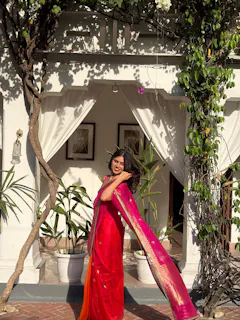
This is such a gorgeous banarasi saree. When I first saw it, I loved the color palette. It is a perfect choice for a bride to be!! Or someone is who is newly married.
Gorgeous color, pure fabric..a statement piece.
Reddish Pink Shaded Banarasi Organza Silk Saree
Dr Suman
Great choice ♥️
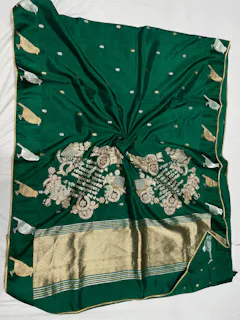
I brought the Gayatri mantra saree in bottle green color. Had a good experience with the team who made the experience hassle free.
Nita Ambani Inspired Red Saree with Gayatri Mantra
Anamika
Something beautiful and special
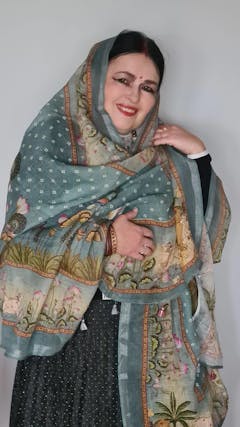
I am very glad to have bought this extraordinary dupatta. The design is unique and the quality of material the best.
Steel Blue Linen Dupatta with Digital Printed Pichwai Motifs
Khushboo
The suit was even prettier in person..loved the fabric and the colour.🩷👍
Red Salwar Suit Set with Intricate Zari Work And Dupatta
Sunayana Sharma
Absolutely worth it
I felt like a queen in this gorgeous saree ❤️✨ You made my Karwa Chauth festival even more special. The quality of the fabric is really good and the Gayatri Mantra embroidery is done so beautifully. I truly recommend Chinaya Banaras and loved being a part of the Chinaya family 💫
Nita Ambani Inspired Red Saree with Gayatri Mantra