Banarasi Dupattas


Recently viewed
Chinaya Banarasi Dupatta: Understanding Craft, Character & Timeless Sophistication
Few garments in Indian fashion carry the depth of history and cultural meaning that a dupatta for women holds. But not all dupattas are created equal. A Banarasi dupatta stands apart, not just as an accessory, but as a textile shaped by centuries of weaving mastery in Varanasi.
Woven along the banks of the Ganga, Banarasi textiles are defined by their intricate zari work, storytelling motifs, and rich silk bases. What makes a Banarasi dupatta unique is not just how it looks, but how it is made, on handlooms, by artisans who carry forward techniques refined over generations.
At Chinaya Banaras, this legacy is preserved through thoughtfully crafted dupattas that balance tradition with contemporary relevance.
What Makes a Banarasi Dupatta Different?
Before choosing or styling one, it helps to understand what truly sets a Banarasi dupatta apart:
1. Handloom Weaving vs. Mass Production
Unlike machine-made dupattas, Banarasi pieces are handwoven, often taking days or weeks to complete. This results in finer detailing and a distinct texture that cannot be replicated.
2. Zari Craftsmanship
Authentic Banarasi dupattas use zari (metallic thread) to create intricate patterns. The quality of zari defines the richness and longevity of the piece.
3. Silk Variations
From Katan silk to Puna silk and satin silk, each fabric impacts how the dupatta drapes, shines, and feels on the body.
4. Cultural Storytelling Through Motifs
Every motif is intentional, rooted in mythology, nature, or heritage design traditions.
The Language of Motifs
Every Banarasi dupatta carries a story shaped by centuries of artistry in Varanasi.
- The pichwai banarasi dupatta reflects devotional Krishna-inspired motifs, rich in cultural meaning and detail.
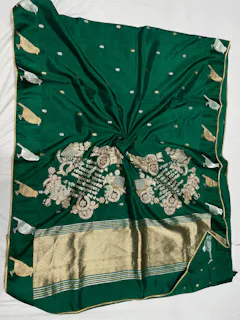
- Nature lovers often prefer the bird motif dupatta, where peacocks and parrots are woven in fine zari, best styled with solid outfits.
- The floral zari dupatta features intricate jaal patterns with blooming motifs that shimmer beautifully, making it ideal for weddings and festive wear.
- For a vibrant statement, the meenakari dupatta stands out with its multi-coloured silk threads woven alongside zari, creating depth, colour, and striking visual richness.
Understanding these motifs helps you choose a dupatta not just for the occasion, but for the story you want to wear.
When and Why to Choose a Banarasi Dupatta
A Banarasi dupatta is not limited to weddings. Its versatility comes from how it can transform even the simplest outfit.
- For Weddings: Adds richness and ceremonial depth to lehengas and bridal looks
- For Festive Wear: Elevates minimal kurtas into occasion-ready ensembles
- For Heirloom Value: A timeless textile that can be passed down generations
- For Statement Dressing: Acts as the focal point when paired with solid outfits
Shop the Collection: Banarasi Dupattas
At Chinaya Banaras, each ready-to-ship dupatta reflects craftsmanship, culture, and Banarasi artistry, thoughtfully woven and available for immediate dispatch.
1. Green Banarasi Silk Dupatta with Bird Motifs
Woven in soft Puna silk, this green Banarasi dupatta features delicate gold zari bird motifs across the body and a richly detailed pallu. The fresh green base balances vibrancy with elegance, while the intricate weaving adds depth. Ideal for festive occasions and weddings, it pairs best with solid kurtas or lehengas, allowing the motifs to stand out with quiet sophistication.
2. Saffron Banarasi Dupatta with Gold Zari Ethnic Motifs
Crafted in satin silk, this saffron Banarasi dupatta showcases a bold gold zari ethnic motif framed by a contrasting border and detailed pallu. The warm saffron hue combined with luminous zari creates a ceremonial feel. Perfect for weddings and festive gatherings, it brings together colour, tradition, and refined craftsmanship in a way that feels both classic and versatile.
3. Green Banarasi Dupatta with Pichwai Motifs – Pavitra Sagar
This Pichwai-inspired Banarasi dupatta is woven in Puna silk with a flowing yet structured drape. Set on a peridot green base, it features gold zari Kamdhenu motifs symbolising abundance. The pallu continues the same narrative, creating visual harmony. Ideal for festive rituals and cultural occasions, it blends devotional storytelling with the timeless elegance of Banarasi weaving.
4. Baby Pink Handloom Banarasi Dupatta with Gold Zari Floral Jaal
Woven in pure Katan silk, this baby pink Banarasi dupatta features an intricate gold zari floral jaal with subtle meenakari accents. The soft hue contrasts beautifully with the rich detailing, while the zari border and pallu enhance its elegance. Perfect for weddings and formal occasions, it pairs well with pastel or ivory outfits for a refined, graceful look.
5. Orange Banarasi Silk Dupatta with Zari Birds Motifs
Bold and vibrant, this orange Banarasi silk dupatta features gold zari floral butis across the body with bird motifs accenting the border and pallu. The structured satin silk border adds definition and richness. Designed for weddings and festive occasions, it pairs effortlessly with lehengas or sarees, adding a striking yet balanced touch to traditional ensembles.
How to Style a Banarasi Dupatta with Intention
Styling is not just about draping: it’s about balance.
- Let the Dupatta Lead: Pair heavily woven dupattas with minimal outfits
- Match Occasion with Fabric: Katan silk for formal settings, lighter silks for day events
- Play with Contrast: Use bold dupattas to add dimension to neutral ensembles
- Modern Layering: Style it as a stole or over one shoulder for a contemporary silhouette
Final Thought
A Banarasi dupatta is not just an addition to your wardrobe, it is an investment in craftsmanship, culture, and timeless design. When chosen thoughtfully, it becomes more than something you wear. It becomes something you keep, reuse, and eventually pass on.